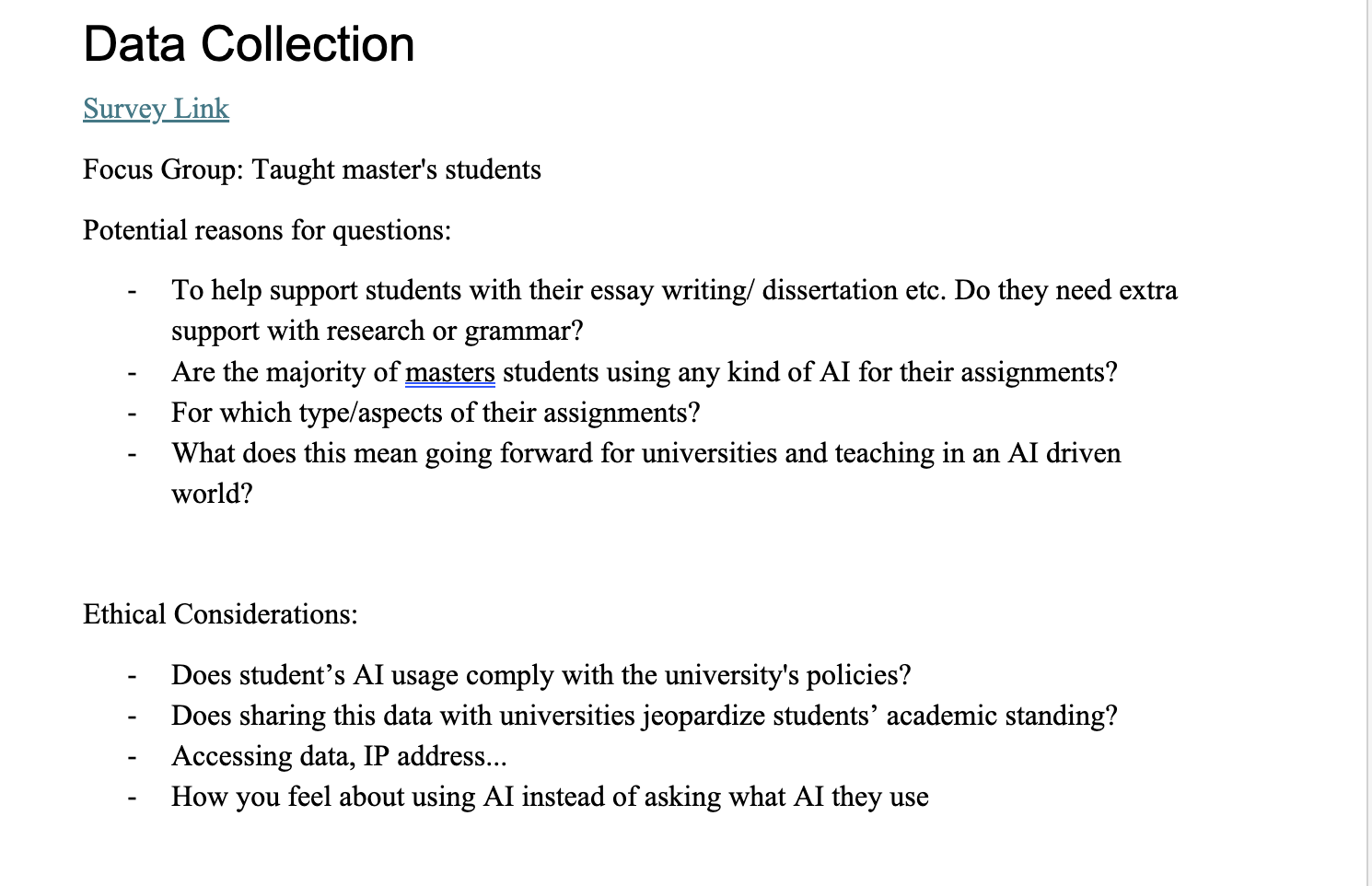
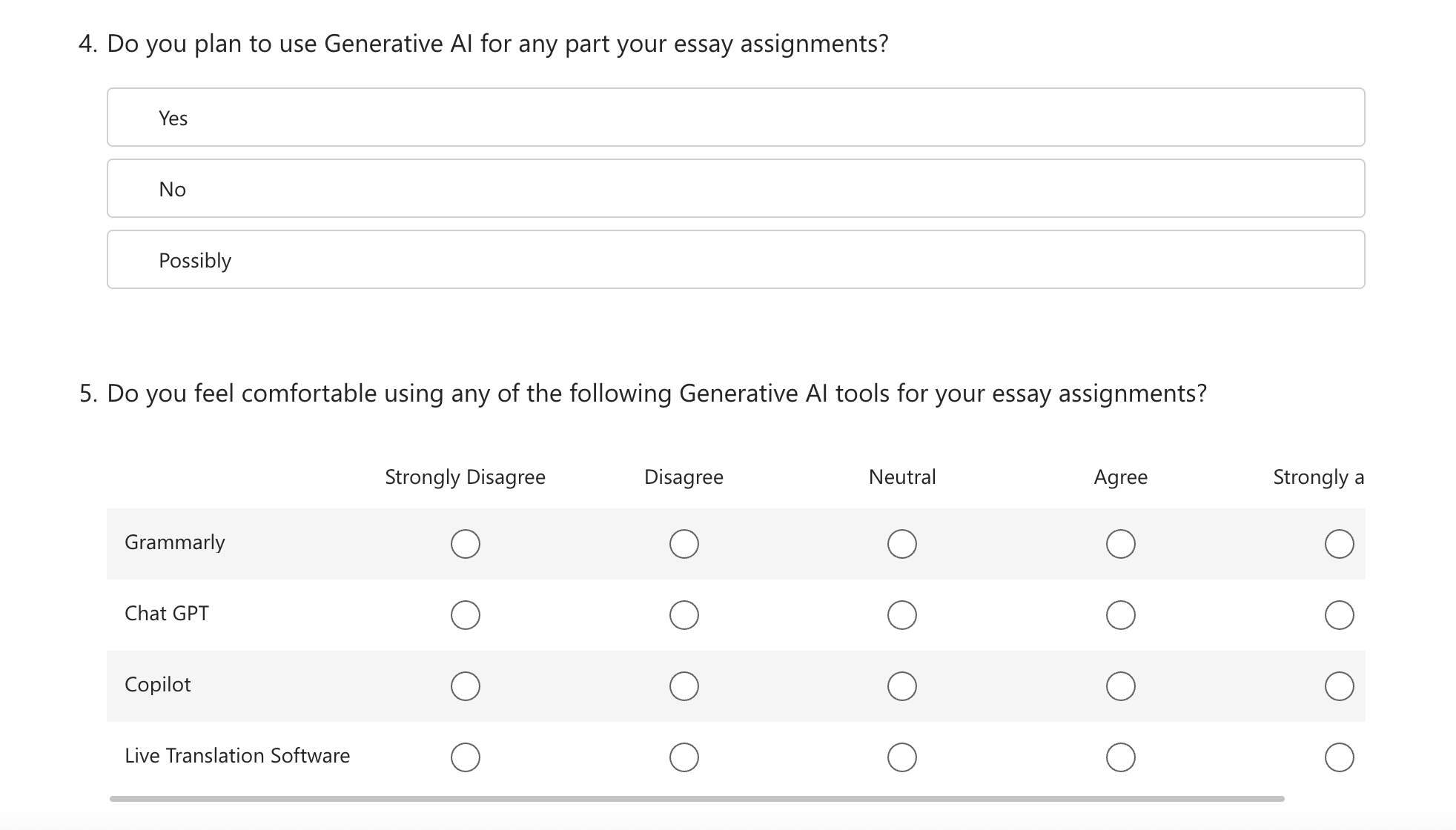
When collecting/generating data, we must think about multiple factors before we can begin to collect the data itself. As a group we were to collect data on student's use of AI whilst studying at university. Within this context, we had to acknowledge that many modules/assignments do not allow for any AI software to be used, so we obviously did not want students to get in trouble with the (hypothetical) survey. Therefore, we decided to make it anonymous and use it to ask students about their confidence in these tools towards their studies in general, not for a specific module. Our intention for the survey was that students would input information about if they had used AI software in the past, how confident they felt with these and how likely they were to use them going forward with any element of their studies.
In this scenario, we would then feed this information back to the university who could highlight people that were perhaps more reliant on AI software and, therefore, may need more help or assistance with their academic skills or assignments etc. Building on from this, we decided to ask students to state if they were international students or not, as this may play into the likelihood of them needing support in this way, for example if English was not their first language. We created a plan for what information we wanted to collect, before drafting our questions and picking the format each question would have on the survey. We then sent it out to our classmates to collect their answers.
The scenario we were given forced our group to think about the impacts and ethics of the data we were gathering rather than just rushing into creating the survey with whatever questions would have been most efficient for our role. This puts into perspective how data has meaning and the data you collect could have consequences in certain contexts.
At the time we did not realise this, but upon reflection we became aware of how we could have improved our choice of questions. For example, we simply asked, 'Are you an international student?'' with 'yes' and 'no' as the response types. However, we later realised that this wouldn't really show as much of a correlation with students' issues with English etc because an American student would still pick 'yes' for being international whilst having English as their first language. If we had asked about language instead, we might have seen a better correlation for helping other students.